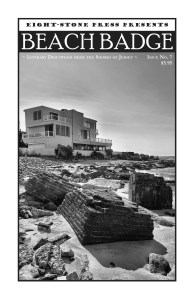
THE BRIGHT, BUSTLING ASBURY PARK of today bears little resemblance to the scrappy urban seaside of my youth. Like so many great cities, Asbury caught the ass-end of the American century, unfair and square. Beaten, starved, and left for dead…until, like all the others, it too became just one more lazy punchline for history’s so-called winners. Its glory days still rang throughout the echo chamber of the Boomer conscious, sure – but to my generation, well, Asbury Park had always been a ghost town. Shunned. Forgotten. Save by those who could still hear her song on the cold, damp winds blowing through the quiet ruins of Springwood Avenue, the Upstage Club, and conjure beauty from decay. Tillie ruled the barren beachfront from his haunted, salt-pocked palace with an unflinching iron grin, reminding all that fun wears many faces.
Twenty-five years in Baltimore have given me far greater appreciation for that little city by the sea than I ever would have known had I not left Jersey. There’s a vibrance here, in Asbury, despite its recent gentrification, that I find conspicuously absent from the places where I grew up, farther down the coast – and as I’ve grown older, I want more of it. I don’t get back to the shore very often, and time is far too precious to squander on the willfully mundane. In that sense, Asbury, like AC, delivers. Even my folks now prefer Atlantic City to the places I grew up…where they grew up. Maybe that’s why I suggested Asbury Park when we began planning a short road trip to the shore.
It’s an unusually hot but otherwise picture-perfect afternoon in late-September 2023 when we check into the Holiday Inn on 66 in Neptune. I’d love to stay at the beach, as would they, but the prices are still prohibitive this early in the off-season, even midweek. This hotel isn’t as robust in its amenities as the one in Manahawkin (where we’re booked the following night), but it’s reliably comfortable, and my folks can easily navigate it.
We crawl our way toward the beachfront down old Asbury’s main drag, Cookman Avenue, now home to hip restaurants, art galleries, trendy boutiques, and cultural centers. As I compiled the first issue of Beach Badge in winter 2022, I quietly hoped it might find a home at Asbury Book Cooperative. Thankfully, it did.
I pull into the giant lot behind the Carousel House, where I would not have dared to park just a few weeks earlier. Bennies cough up 30 bucks a day here in the high season for their own Tesla-sized slice of paradise. Today, though, the Honda will live there rent-free.
Mom wants to see the Pony she’s heard so much about all these years, from me and others. “The Boss’s old stomping grounds,” as the twins – Paul and Charlie – said with muted awe back in our Stockton days, obstructions real or perceived having apparently prevented such a pilgrimage from their native Penns Grove. I never listened to much Springsteen in his heyday, when I was a kid. As synonymous as he is with the region, there was always a bit of a cultural disconnect between the northern and southern shores. The Philly-versus-New York influence, I guess. The urban and suburban. And, of course, the rural.
And then there was me – the weird South Jersey kid obsessed with Eddie and the Cruisers, for whom Brooklyn-born Michael Paré and Rhode Island’s Beaver Brown incongruously came to envisage a place that I both deeply loved and longed to escape. Home. Many here still view the shore through a hyperlocal lens, acutely focused on their hometown, or wherever their families summered many moons ago. Twenty-five years and a three-hour drive now distance me from Cape May, Sandy Hook, and all points in between, which may explain another Stockton buddy’s recent observation of how I seem to be “at home” anywhere along the shore, even if I don’t belong there.
We cross Ocean Avenue to the boardwalk and head north. Past the splash park, already shuttered for the season, the Silverball Arcade, Madame Marie’s Temple of Knowledge, and ubiquitous public art. Resting on a bench every so often to give Dad’s knees a break; like this place, they ain’t what they used to be. We stroll through Convention Hall’s Grand Arcade, past the sweatshirts, sunscreen, and canvas totes refuting, “Bitch, please, I’m from Asbury Park.” Enjoy an early dinner in the open salt air of the boardwalk, the gorgeous weather summer’s consolation prize to weary locals for enduring June, July, and August.
A chill begins to permeate the dry September air as the setting sun dissolves its coalition with the warm Atlantic, reminding me that winter is coming. That fall is already here, and everything will turn much colder before we enjoy this sort of warmth again. Indeed, money may one day kill the vibe here, as it has almost everywhere else along the shore, like a beleaguered coral reef bleached of life by treated lawns and vinyl siding. Some would argue it already has.
But not just yet. My folks dig it, as I expected – as I hoped. And for that matter, so do I. There’s still something here, I think; after all, we are here, in one of the shore’s last bastions of natural personhood. No, it’s not the same as it used to be, nor is that always a bad thing, if you keep the faith. Like Billy Joel: “You know the good ol’ days weren’t always good / And tomorrow ain’t as bad as it seems.” I’ve long thought my parents would enjoy it here, and I was right. I also knew they would never make the trip themselves, and that making it happen was the only way it ever would.
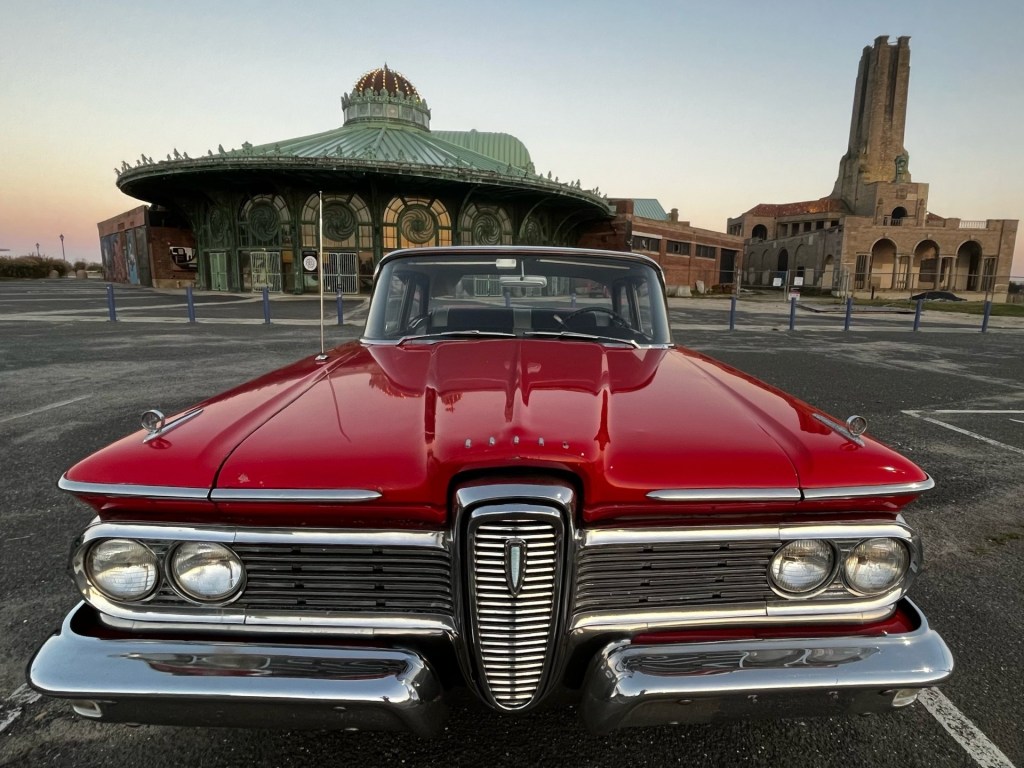
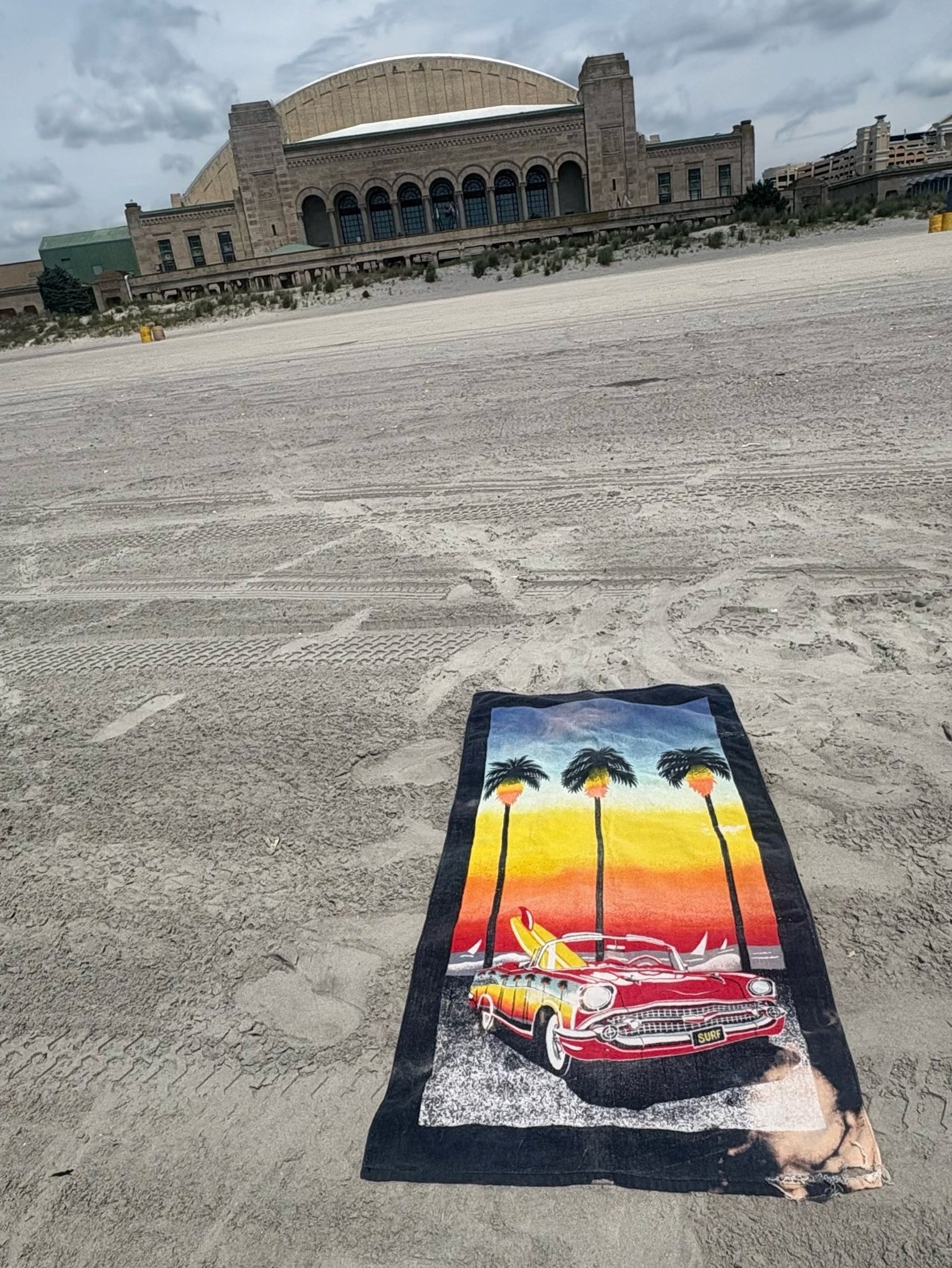
The lot is nearly empty when we reach the car, and that’s when I spot it: bullet lights and chrome and candy apple-red basking in the ebbing glow of local summer. Just like the fancy beach towel they bought me the summer I turned 12 – a souvenir of our trip to Cape Hatteras. I fell in love with its stylized depiction of an old Bel Air convertible, longboard in back, parked by the beach at sunset, the moment I saw it hanging on the wall of Lee Robinson’s General Store. We’d fled the broiling heat of our rented trailer for the air-conditioned opulence of a local mom-and-pop motel. One morning, I trailed my younger brothers, then 4 and 6, out to the pool, where an older couple wading in the deep end asked them where we were from. Five-hundred miles from home, they answered factually.
The couple sought to clarify: “Manahawkin…New Jersey?”
I stopped dead in my tracks. The old folks were from Toms River.
I still have that towel. It wasn’t cheap, as I recall – maybe 20 bucks. A lot of money then for such a thing, especially for us, on a trip that had already cost far more than whatever Mom and Dad had budgeted. Still, they knew me, knew I really wanted it – and they made it happen.
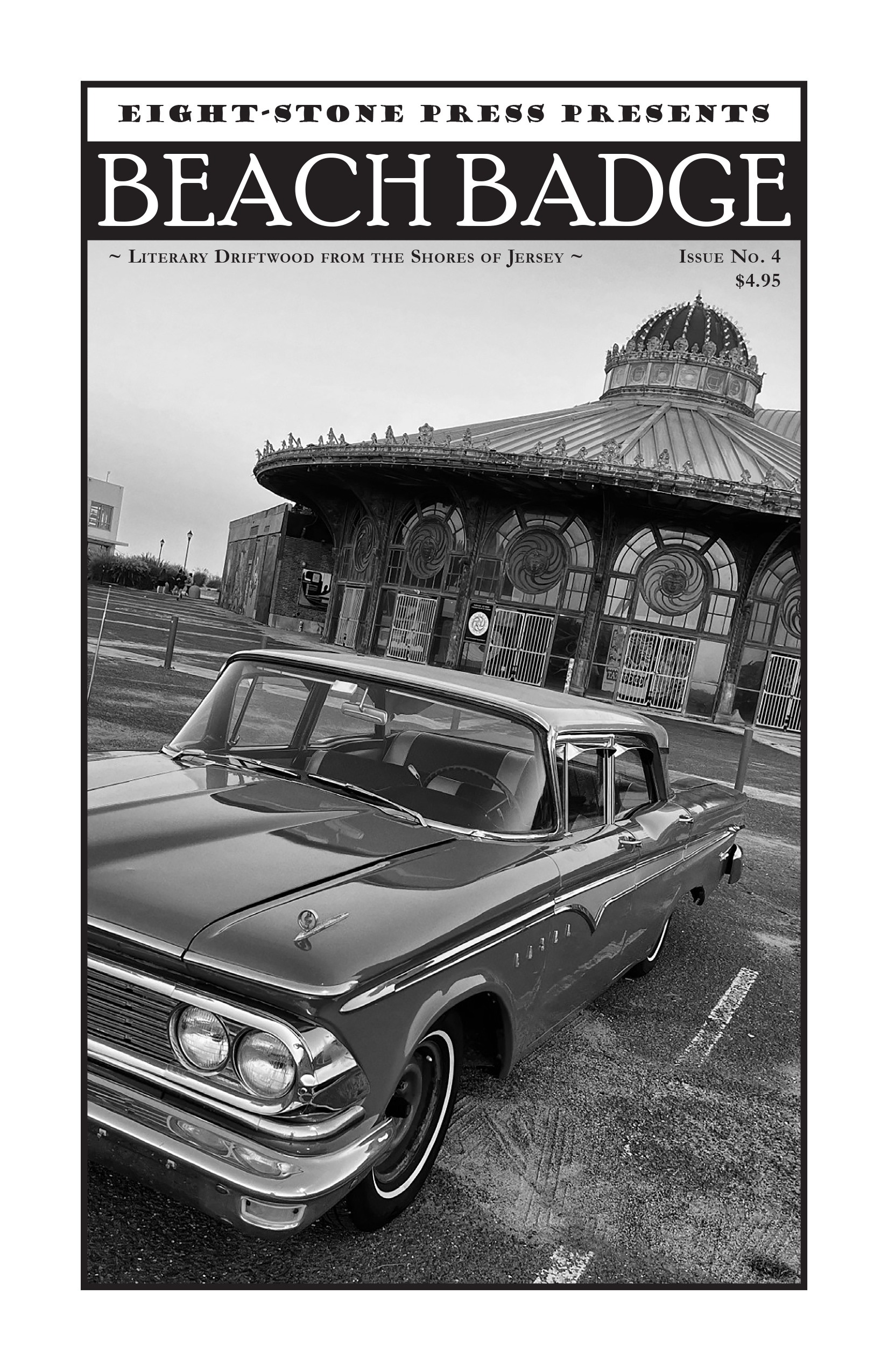
The Bel Air was an obvious choice – second only to the woodie wagon – for any retro pop-art surf motif demanding wheels. Asbury, however, brought not a Chevy, but a Ford – specifically, an Edsel Ranger. Plagued by early design flaws, misguided marketing, and underwhelming sales, the Edsel was a commercial flop of spectacular proportions. The Ford Motor Company ate a fortune when it was forced to kill the line in 1960 after just three years of production. The Edsel became a pop-culture punchline. Yale Law professor Jan Deutsch, author of Selling the People’s Cadillac: The Edsel and Corporate Responsibility, called it “the wrong car at the wrong time.”
No sensible commercial artist would have put an Edsel on that beach towel back in 1987. Maybe not now, either. But on the cover of Beach Badge – itself, in a sense, the wrong zine for the wrong place at the wrong time – it worked. More importantly, it reaffirmed for me that you can still find magic here if you look for it.
And sometimes even if you don’t.
William Patrick Tandy
Editor & Publisher
August 2025
 Eight Stone Press